
Lower Orange River downgrade raises concern for Northern Cape irrigation growers
Northern Cape irrigation farmers are concerned that plans to classify the Lower Orange River as a Class III water resource could coincide with lower flows and worsening water quality, placing additional pressure on one of South Africa’s most important irrigated production regions. The lower Orange River region is South Africa's second biggest table grape production region.
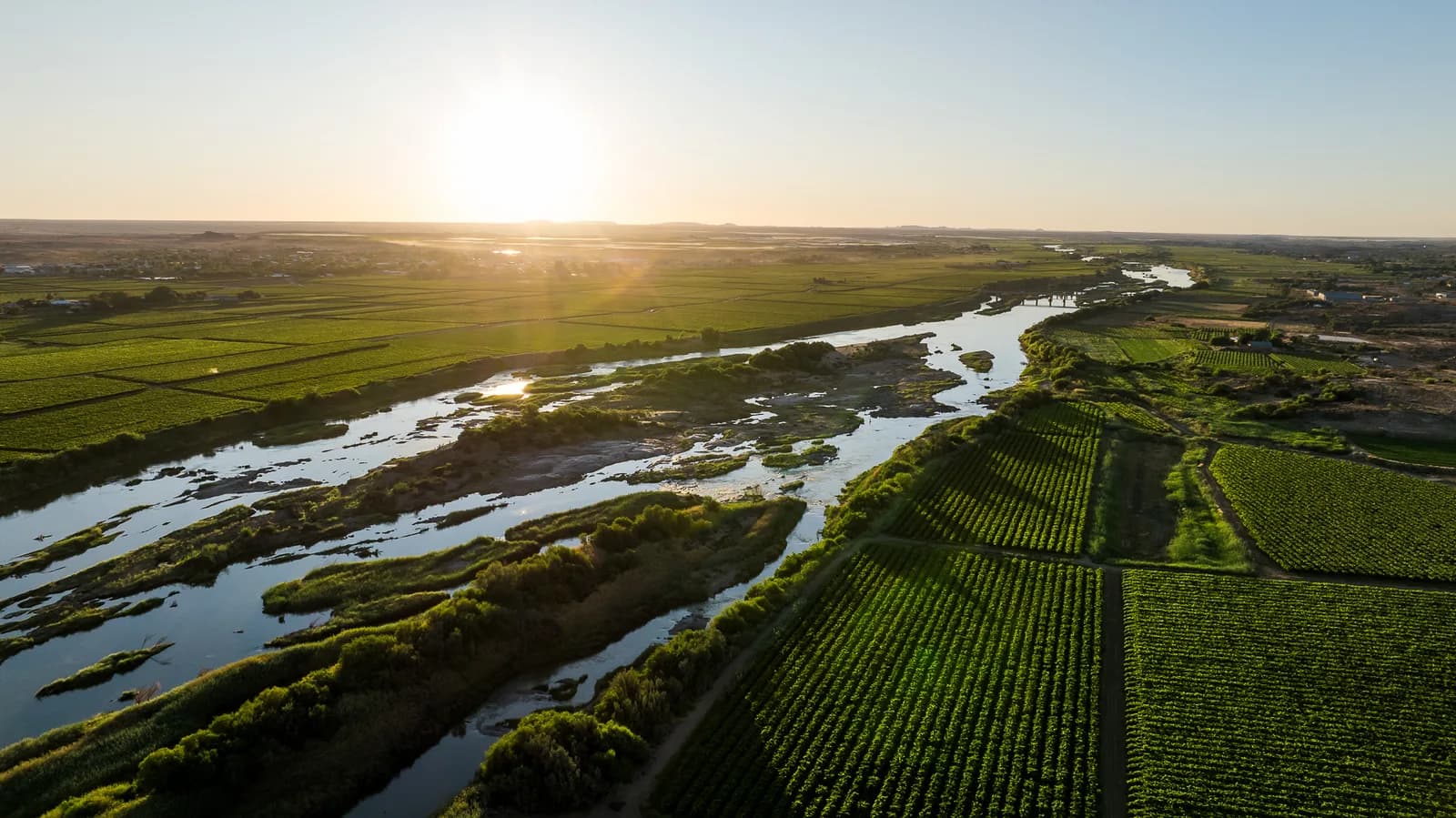
The Department of Water and Sanitation’s classification work for the Lower Orange recommends Class III for the main river system, while still requiring stricter Resource Quality Objectives in sensitive reaches. The department’s own technical work warns that lower future flows could reduce the river’s dilution capacity and increase water-quality pressure.
For producers along the river, the concern is straightforward: less good-quality water could affect irrigation reliability, crop performance and the long-term viability of high-value agriculture.
Pollution becomes more serious when flows fall
Fritz Bekker of Gariep Watch has spent years researching the impact of declining water quality on communities, ecosystems and agriculture along the river. One of the main concerns is untreated or poorly treated sewage entering the river from municipalities with struggling wastewater infrastructure. Lower river flows would make this more serious because there is less water available to dilute pollutants. Potential consequences include higher pathogen loads, salinity, eutrophication, lower oxygen levels and contamination from chemicals and other pollutants.
Grower-backed research helps shape tighter targets
Agricultural organisations and businesses including Raisins SA, the Orange River Producers Alliance, the Orange River Agricultural Union, Karsten Group and Agri Noord-Kaap have supported research by Gariep Watch. That work helped provide additional scientific information about the river and the needs of irrigation users.
The Department of Water and Sanitation has since developed Resource Quality Objectives for the Lower Orange system, including numerical limits intended to protect water users and ecological health. Under the National Water Act, once finalised and gazetted, these objectives become binding on authorities and institutions.
New pollution register adds accountability
The Department of Water and Sanitation has also introduced a National Pollution Register to record formal enforcement action against municipalities, companies and other entities responsible for water pollution. The register is intended to show where directives, convictions or court orders have been issued, giving the public greater visibility over enforcement action. For growers, stronger enforcement is important because irrigation users downstream can carry the consequences of pollution generated far upstream.
Why this matters for Northern Cape producers
The Lower Orange River underpins a large irrigated agricultural economy that includes table grapes, raisins, citrus and other crops. These production systems depend not only on having enough water, but on having water of suitable quality. Poorer water quality can affect soils, irrigation equipment, crop health and food-safety risk, while increasing the cost of managing salinity and other contaminants.
The issue therefore goes beyond environmental classification as for producers, the real test will be whether the new water-quality objectives are enforced strongly enough to prevent further deterioration as pressure on the river system increases. With future water availability already under scrutiny, protecting the quality of the water that remains will be critical to maintaining agricultural production and investment along the Lower Orange River.