
South Africa’s Kiwifruit Industry: A Sweet Surge of Innovation and Opportunity
South Africa’s kiwifruit industry remains small by global standards, but rapid expansion, improved varieties and a valuable early-season marketing window are positioning the country as an emerging premium supplier. New yellow- and red-fleshed cultivars are proving particularly well suited to South African conditions and are driving renewed investment in the crop.
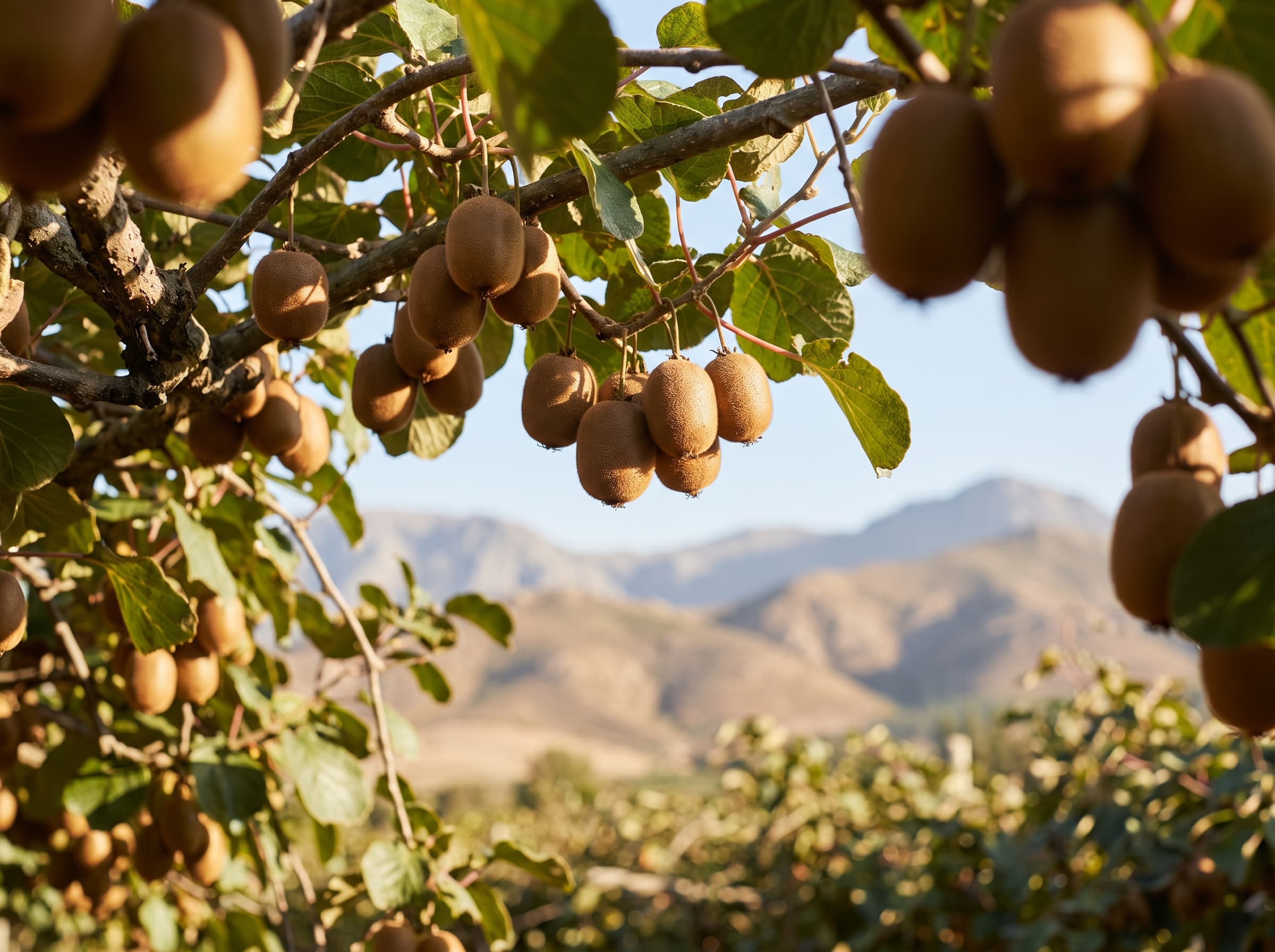
Kiwifruit has been grown commercially in South Africa for more than two decades, but traditional green varieties struggled in many regions because of their relatively high winter-chill requirements. New-generation yellow and red varieties require less chilling and are better adapted to the country’s warmer production areas, opening opportunities across a much wider geographical area.
Production now stretches from Mpumalanga and KwaZulu-Natal to the Western and Southern Cape, including Grabouw, Rawsonville and the George area. New plantings continue to expand as growers gain confidence in both production techniques and export performance.
One of South Africa’s key advantages is timing. Local fruit enters international markets ahead of the large New Zealand crop, giving exporters access to a relatively quiet supply window. Earlier industry experience indicated an advantage of around four weeks, particularly in Europe.
This opportunity is particularly important for yellow and red kiwifruit, where consumers are increasingly seeking sweeter fruit and greater varietal choice. DORI™, a commercially established yellow-fleshed cultivar, and YA50, with yellow flesh and a distinctive red centre, are among the varieties being developed locally. TopFruit describes YA50 as a low- to medium-chill variety with good storage potential and a mid-March harvest.
Exports grow from a small base
South Africa remains a minor player compared with New Zealand and Chile, but growth has been rapid. The 2026 Southern Hemisphere Fruit Trade Statistical Yearbook reports South African kiwifruit exports of 3,016 tonnes in 2024/25, up 44% year on year, with a five-year average growth trend of 31%. New Zealand, by comparison, accounted for 85% of Southern Hemisphere exports.
The industry is therefore focusing less on competing through sheer volume and more on quality, timing and premium varieties. Export destinations include Europe, the UK, the Middle East and Asian markets.
This strategy received further support in 2026. French marketer Primland reported a promising start to its South African Oscar Gold season in March, highlighting fruit quality and its long-term partnerships with South African growers. Later in the year, international supplier Jingold identified South Africa as one of its main areas for future sourcing growth as newly planted orchards come into production. Fruitnet
South Africa is also attracting new varietal investment. In September 2026, Fruitnet reported plans to develop commercial production of the Korean yellow-fleshed Haegeum variety in South Africa, Australia and Chile. Fruitnet
A specialised and capital-intensive crop
Kiwifruit remains technically demanding. Orchards require substantial investment in trellising, irrigation and often protective structures, while careful canopy management, pollination and post-harvest handling are essential. Growers also need varieties suited to specific local South African climatic conditions. This makes technical support, varietal trials and coordinated marketing particularly important as the industry grows.
The outlook remains promising as South Africa’s combination of suitable production regions, an early export window and expanding access to premium yellow and red varieties gives it a distinct position in the international market. The challenge will be to grow production without losing the quality and timing advantages that currently differentiate South African kiwifruit.
As more young orchards reach commercial production, South Africa is likely to remain a relatively small supplier globally, but an increasingly significant one in the premium early-season segment.