
Better data is only useful when it leads to better farming decisions
South African farmers are collecting more information than at any point in the past, but the real competitive advantage increasingly lies in knowing what to do with it.
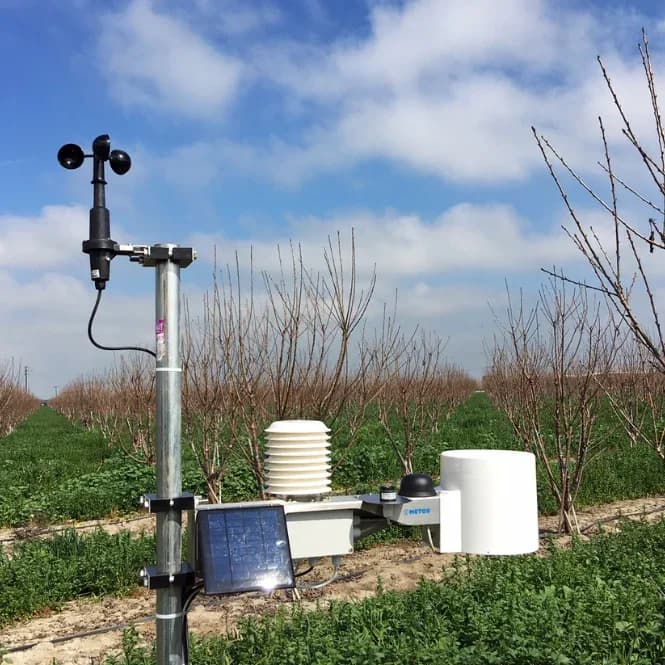
From hyper-local weather observations and soil analysis to long-term cultivar trials and treatment economics, producers now have access to a growing range of tools that can support better decisions. For growers in the Western Cape, where seasonal variability, disease pressure, input costs and water availability can quickly affect profitability, turning that information into practical action is becoming increasingly important.
The issue was highlighted during the recent South African launch of Pessl Instruments’ initiative which plans to establish 100,000 professionally operated weather stations across Africa.
Weather monitoring remains relatively sparse across much of the continent, with Africa estimated to have only about one weather station for every 26,000 km². A denser network could provide farmers with far more localised information and reduce their dependence on weather observations collected some distance from their farms.
Pessl Instruments' FieldClimate platform is designed to take those observations further by converting weather readings into information producers can use for decisions around irrigation, disease risk, pests, frost and other production threats. However, the broader message emerging from the initiative is that installing more weather stations is only part of the solution.
From measurements to decisions
Dr Tara Southey of Terraclim, quoted in reporting by Hortgro on the initiative, has pointed to an important challenge facing modern agriculture: having access to more weather information does not automatically remove uncertainty. For farmers, the value lies in translating observations into reliable guidance that can be applied at the right time.
Dr Ilse Trautmann, who serves on the advisory board supporting the Pessl initiative, has similarly described the objective as moving from weather data towards knowledge that can support both immediate and longer-term farming decisions. This distinction is particularly relevant in South African agriculture.
Knowing the temperature, rainfall, humidity or leaf moisture levels on a farm has limited value on its own. Knowing that those conditions are creating a disease-risk window, signalling a possible frost event or affecting irrigation requirements gives the grower something actionable. That is also the direction agricultural advisory services are increasingly taking.
InteliGro marketing manager Janet Lawless recently told Food For Mzansi that agricultural data becomes valuable when it contributes to better decisions and reduces production risk. The emphasis is therefore shifting away from simply presenting farmers with large quantities of information towards interpreting it in a way that assists with decisions such as spraying, timing and broader risk management.
Local trials remain critical
While digital information is only one part of the picture, long-term field trials provide another important source of decision-making intelligence because they show how production strategies perform across different seasons rather than under one isolated set of conditions.
Wheat trials conducted near Moorreesburg by Intelekt Solutions, and referenced by agronomist Reinhardt Wessels, are an example. The trials compare cultivars and fungicide programmes over multiple seasons. For Swartland grain producers, that historical record can be more useful than simply identifying which treatment performed best in the latest season.
A cultivar or fungicide programme that performs exceptionally well under one set of rainfall or disease conditions may not necessarily deliver the same result the following year. Multi-season data gives growers a better indication of consistency and risk.
This is particularly important in the Western Cape, where rainfall distribution and seasonal conditions can vary substantially from one production year to the next.
Soil data also needs local interpretation
The same principle applies below ground as research highlighted by soil scientist Jan van Zyl has shown that nutrients including calcium, potassium and phosphate can accumulate in shallow soil layers in some Swartland soils managed under minimum-tillage systems. Such findings matter because a soil analysis should not necessarily be interpreted in isolation from the farming system, soil profile and local production conditions.
Understanding where nutrients are concentrated can influence how producers interpret soil-test results and make fertiliser and soil-management decisions. For South African growers facing sustained pressure from fertiliser and other input costs, more precise interpretation can help avoid unnecessary applications while ensuring that production is not compromised.
The highest yield is not always the best result
There is also an economic dimension to agricultural data that is becoming increasingly important. Dr Karen Truter, InteliGro technical marketing specialist in plant nutrition, has emphasised that treatment performance should not be judged on yield alone. For instance, the programme producing the highest yield may also carry substantially higher input costs. Once those costs are included, an alternative treatment may deliver a stronger financial return.
This changes the question producers need to ask as rather than only asking, “Which treatment produced the most?”, the more useful question may be, “Which treatment produced the best return for the level of risk and investment involved?”
Why this matters for South African producers
For South African agriculture, the opportunity lies less in collecting ever-larger volumes of information and more in bringing different sources of intelligence together. Local weather observations can improve the timing of interventions. Long-running trials can show how cultivars and treatments perform under different seasons. Soil research can improve nutrient management, while economic analysis helps determine whether a technically successful treatment is also commercially worthwhile. Together, these tools can help producers make decisions with greater confidence in an environment where margins are tight and production risk remains high.
The next phase of data-driven farming in South Africa is therefore likely to be defined not by how much information producers can collect, but by how effectively that information is converted into practical decisions on the farm.