
South African blueberry industry enters 2026 season with stronger northern crop and improving export prospects
South Africa’s blueberry industry is entering the 2026 harvest with improving export prospects, strong early production in northern regions and a growing focus on positioning fruit in the right market window rather than simply expanding volumes.
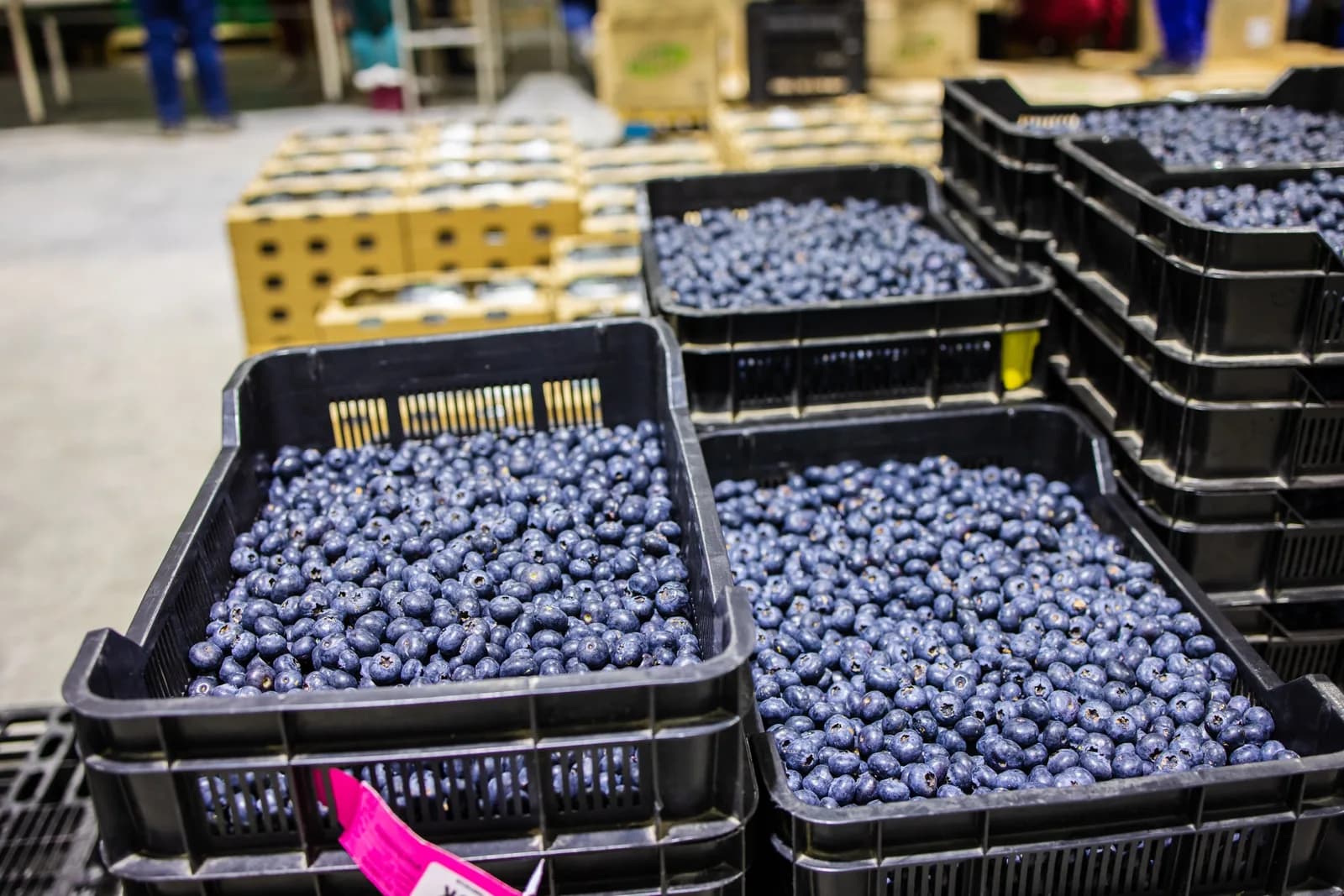
The sector has changed significantly after a decade of rapid growth. Blueberry plantings expanded from just 471 hectares in 2015 to a peak of around 3,800 hectares in 2022/23, before contracting as growers responded to weaker prices, rising costs and tougher global competition.
The industry remains strongly export-orientated, with the UK and EU its most important traditional markets, while the Middle East and Asia are becoming increasingly important. Negotiations to grant market access for South African blueberries to China are in an advanced stage, following the recent signing of a protocol for South African cherries in September 2026.
Strong start in the north
The 2026 season has started well in Limpopo, Mpumalanga and Northwest provinces, where growers have benefited from strong yields, good fruit quality and favourable export pricing. Production in the country’s norther provinces has become increasingly important because these regions harvest before the major Peruvian crop reaches international markets.
Elzette Schutte, operations manager at Berries ZA, told Farmer’s Weekly that northern plantings now account for around half of South Africa’s blueberry hectares. “Since this crop is harvested earlier in the season, before Peru, it is a more favourable window to be in than the Western Cape,” she said.
Export prices earlier in the season were reported at around R135/kg to R150/kg, compared with levels of about R90/kg after heavier Peruvian volumes entered the market from mid-October last year.
Western Cape outlook less certain
The Western Cape, historically South Africa’s dominant blueberry region, faces a more uncertain season after a warmer-than-normal and dry winter, compounded by flood damage on some farms earlier in the year. Schutte said crops generally still look good, but lower winter chill accumulation and possible irrigation pressure could affect final performance. Port reliability is an additional concern as the region moves into its main export period.
Lower Peruvian crop could ease global pressure
South Africa remains a relatively small producer compared with Peru, the world’s dominant blueberry exporter, but the current Peruvian season may provide some relief.
Proarándanos, the Peruvian blueberry industry representative body has repeatedly revised its 2026/27 export forecast downward as El Niño-related weather affected crop development. Its latest projection places exports at around 344,000 tonnes, more than 10% below the previous season despite approximately 15% more hectares being in production. An earlier October forecast of 366,000 tonnes had already represented a 9.4% reduction from the initial August projection of 404,000 tonnes.
This matters for South African growers because Peru’s biggest export weeks overlap directly with the Western Cape’s October-to-December marketing window. Lower Peruvian volumes could reduce congestion in key UK and European markets and support firmer pricing for South African fruit.
South African growers are increasingly focusing on genetics, flavour, firmness, freshness and targeted market windows. “Blueberries aren’t just blueberries,” Schutte said. “It’s about selecting the right variety according to flavour, freshness, and crispness.”
New markets remain important
South Africa is also trying to reduce its reliance on Europe. Market access discussions with China continue, while India represents another potentially important destination. The pest risk assessment for India has been completed and the import tariff reduced from 30% to 10%, although reciprocal market-access negotiations remain unresolved.
The domestic market is also growing, supported by retailers increasingly marketing specific varieties according to flavour and eating quality.
Why this matters for South African growers
The blueberry industry’s prospects for growth in the near future are expected to be slower than the rapid planting boom experienced during the past decade. Success will depend increasingly on where orchards are planted, which genetics are selected, when fruit reaches market and whether exporters can access a broader range of destinations.
The reduced Peruvian outlook creates a potentially better international pricing environment for the current South African season, but it does not remove the underlying competitive pressure. South Africa’s opportunity remains in supplying differentiated, high-quality fruit at the right time.