
South African stone fruit sector strengthens on higher exports and crop value
South Africa’s stone fruit industry delivered a stronger performance in 2025, with industry turnover rising by 12% to about R5 billion, according to Hortgro’s latest Key Deciduous Fruit Statistics.
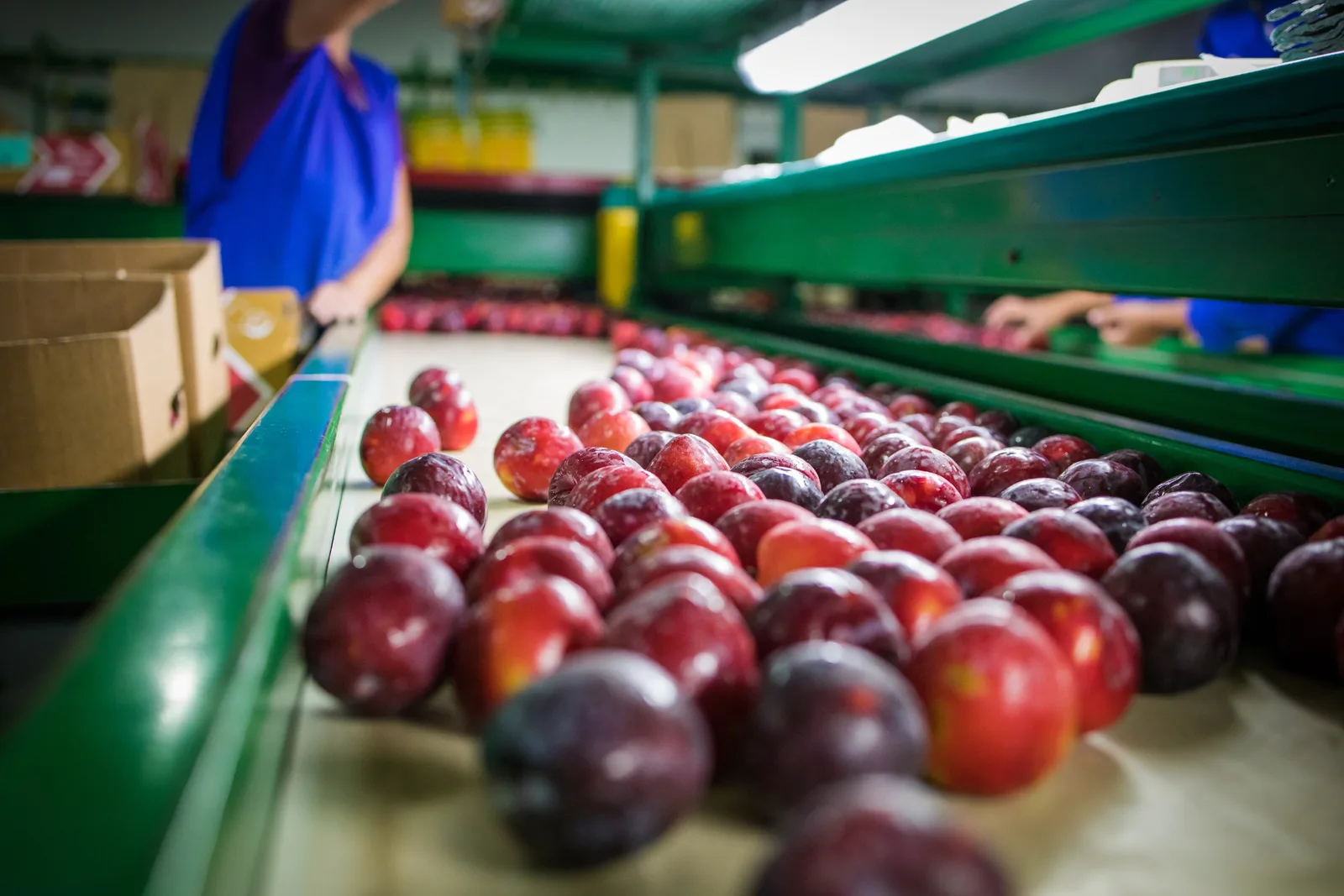
While it is still too early for official projections for the upcoming stone fruit season, Hortgro's latest Key Deciduous Fruit Statistics report reveal that South Africa's stone fruit industry recorded a strong performance in 2025, with industry turnover increasing by 12% to approximately R5 billion.
Plums remained the sector’s largest contributor, while nectarines and cherries showed particularly strong growth, reinforcing the importance of stone fruit to the country’s horticultural export economy.
The sector, which includes plums, peaches, nectarines, apricots and cherries, produces around 350,000 tonnes of fruit annually and covers approximately 15,500 hectares. Production is concentrated mainly in the Western Cape and supports more than 19,000 jobs across farms, packhouses, exporters and related services.
According to FreshFruitPortal, citing Hortgro’s latest Key Deciduous Fruit Statistics, total stone fruit turnover reached approximately R5 billion in 2025, up 12% year-on-year. This compares with roughly R4.5 billion for the previous year when the US dollar figure reported for 2024 is converted to rand.
The improvement came despite the high capital and production costs associated with stone fruit farming and reflect stronger production and exports across several categories.
Plums remain the industry leader
Plums remain South Africa’s largest fresh stone fruit export commodity. Approximately 5,040 hectares were planted to plums in 2025, with production reaching 110,579 tonnes – an increase of 17% from the previous year.
Exports accounted for 78% of the crop, with 18% sold through the local fresh market and 4% destined for processing.
The value of plum production increased by 22% to approximately R2.33 billion, while exports reached 14.91 million 5.25kg-equivalent cartons. Europe remained the largest destination with 44% of exports, followed by the Middle East at 17% and the United Kingdom at 15%.
This reinforces the unusually export-focused nature of South African plum production compared with several of the country’s other stone fruit categories.
Nectarines show strong expansion
Nectarines recorded the strongest export growth among the major stone fruit categories in 2025.
Exports increased by 19% to 10.42 million 2.5kg-equivalent cartons. Europe received 44% of shipments, the UK 38% and the Middle East 12%. Hortgro attributed part of this growth to the relatively young orchard profile, with around 32% of nectarine orchards consisting of younger trees that are progressively moving into full production.
This continues a longer-term expansion trend in South African nectarine production. Earlier industry statistics showed a particularly high proportion of young orchards, pointing to further production potential as these plantings mature.
Cherries continue rapid growth
Although still small compared with plums and nectarines, cherries have emerged as one of the fastest-growing segments of South African stone fruit production.
Cherry production reached 3,645 tonnes in 2025, 17% higher than in 2024. Around 2,276 tonnes were sold through the domestic fresh market, while exports accounted for 1,272 tonnes. Total crop value reached approximately R314 million.
Exports amounted to almost 231,000 5kg-equivalent cartons, with the UK receiving 60%, Europe 18% and the Middle East 12%.
The increased production has resulted from rapid orchard development in recent years. Cherry plantings nearly doubled between 2018 and 2023, while newer cultivars offering improved fruit size, eating quality, shelf life and yield have supported the industry’s ability to target premium export markets.
Apricots remain processing focused
Apricot production declined by 6% in 2025 to 32,910 tonnes. Unlike plums and nectarines, the South African apricot industry remains heavily oriented towards processing and drying.
Processing absorbed 61% of production and drying another 22%, while exports represented 12% and the local fresh market 5%. The crop generated approximately R290 million in production value.
The Middle East was the dominant fresh export destination, receiving 60% of shipments, followed by the UK at 22% and Europe at 17%.
Peaches similarly retain an important processing component, although new cultivars, including donut peaches and newer speciality selections, are creating opportunities to reposition parts of the crop for higher-value fresh markets.
New markets strengthen export prospects
Market diversification is becoming increasingly important as South Africa expands stone fruit production and seeks alternatives to its traditional European and UK markets.
An important breakthrough came in February 2026 when South Africa dispatched its first full commercial container of stone fruit to China following the implementation of a new trade protocol. The shipment contained approximately 20,000 cartons of premium plums, including African Delight and Ruby Star.
The 2025/26 season subsequently provided further evidence of the industry’s export momentum. Hortgro reported 32.4 million cartons of stone fruit available for export, 15% more than the previous season. Plum exports increased by 6%, nectarines by 21%, peaches by 41% and cherries by 111%.
For an industry with a long export history (South Africa’s first recorded fresh-fruit export consisted of peaches shipped to England in 1892), the combination of maturing orchards, new cultivars and broader market access provides an important platform for continued growth.
Plums remain the backbone of the sector, but the rapid development of nectarines and cherries suggests that the composition of South Africa’s stone fruit export industry is gradually becoming more diverse.