
Cosmic Crisp enters South African retail sector as Checkers secures the excluse rights to this club variety
South Africa’s first commercial crop of Cosmic Crisp apples has reached the local market, introducing another internationally licensed club variety into the country’s deciduous-fruit sector.
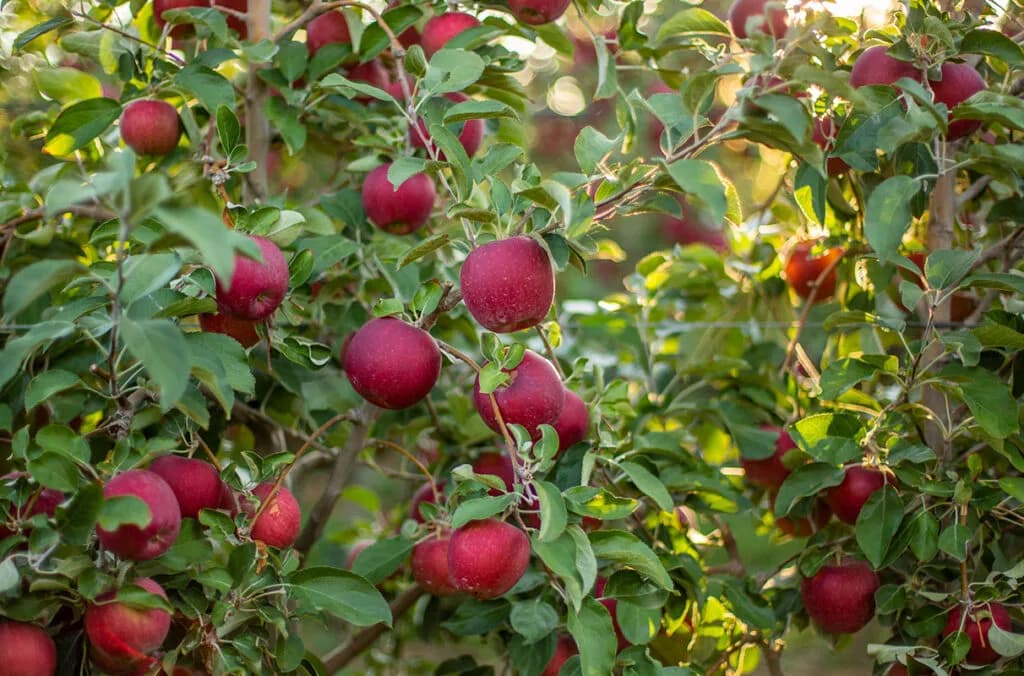
The apples are being supplied by Tru-Cape Fruit Marketing from grower shareholders in Grabouw and Ceres, where the first trees were planted in 2022. The initial crop went on sale from mid-September through selected Checkers and Checkers Hyper stores under an exclusive retail arrangement.
For South African apple growers and consumers, the significance of the launch goes beyond a new product on supermarket shelves as Cosmic Crisp forms part of a growing global system in which the production and marketing of new cultivars are tightly controlled through licensing, royalties and trademarked marketing programmes.
A tightly managed variety
Cosmic Crisp is the commercial brand name for WA 38, a cultivar developed by Washington State University from a cross between Enterprise and Honeycrisp. The variety reached the US market in 2019 after years of development and commercial testing. Unlike open cultivars that can be planted more freely, Cosmic Crisp is managed through a licensed production system. Washington State University owns the intellectual property, while Proprietary Variety Management oversees commercial licensing. Cosmic Crisp is now licensed in several major apple-producing countries, including South Africa, New Zealand, Australia, Chile, Argentina and parts of Europe. Growers participating in the programme pay both tree royalties and a percentage on branded fruit sales. The model is intended to control production volumes, maintain brand consistency and protect value across the supply chain.
What the club model means for local growers
The arrival of Cosmic Crisp comes at a time when South Africa’s apple industry is increasingly focused on orchard renewal rather than simple expansion. South Africa had about 25,385 hectares under apples in 2025, with Royal Gala and Gala types remaining the largest cultivar grouping by area.
Older or less productive blocks are being replaced with newer cultivars, improved rootstocks and higher-density planting systems. This places greater importance on selecting varieties that can deliver acceptable yields, market demand and export potential over many years.
Apple exports reached approximately 49.6 million equivalent cartons during the 2025 season, while the 2026 estimate stands at around 52.2 million cartons. For growers considering new plantings, cultivars such as Cosmic Crisp therefore compete not only on yield or fruit quality, but on whether they can generate sufficient returns to justify the higher costs associated with licensed genetics.
Premium varieties offer opportunity — but also restrictions
The stronger marke positioning enjoyed by club varieties provides growers with improved marketing opportunities for their fruit. Limited production, coordinated branding and retailer partnerships can help differentiate fruit from standard commodity cultivars.
South Africa’s counter-seasonal production window also gives growers an opportunity to supply northern hemisphere markets at times when locally produced fruit is less available. However, participation comes with the constraints such as royalty payments, which in turn increases establishment costs, and licensing agreements which can determine where trees may be planted and where fruit may ultimately be marketed.
Export opportunities are therefore influenced not only by consumer demand, but also by the territories covered under the licensing programme. For growers, this makes variety selection a more complex commercial decision than simply choosing a cultivar with desirable horticultural characteristics.
Retail exclusivity puts consumer demand to the test
Checkers’ exclusive launch of Cosmic Crisp gives the retailer an opportunity to differentiate its apple offering while giving Tru-Cape a controlled platform from which to introduce the variety to South African consumers. According to Freshmark general manager Quintin Paladin, red and blush apples account for around 60% of the retailer’s apple sales. Cosmic Crisp joins other distinctive products offered exclusively through the retailer, including Pink Lemons, Finger Limes and ONIX citrus.
For Tru-Cape, however, the early South African plantings remain part of a broader process of evaluating international cultivars under local production conditions. Managing director Roelf Pienaar has indicated that new varieties are assessed carefully before any broader commercial commitment is made.
Storage performance could strengthen the commercial case
One of Cosmic Crisp’s notable characteristics is its storage ability. The apple retains texture for extended periods in cold storage and is also slow to brown after cutting. These characteristics could make it attractive for longer marketing programmes and potentially for fresh-cut applications.
For South African producers and exporters, good storage performance can be particularly valuable given the long distances involved in reaching many export markets. A longer selling window can also help marketers manage fruit more strategically rather than being forced to move large volumes over a short period.
Why this matters for South African apple producers
The first local Cosmic Crisp harvest provides a useful example of how the economics of apple production are changing. Growers are increasingly evaluating cultivars not only on orchard performance, but also on branding, licensing costs, export permissions, storage characteristics and retailer demand.
Club varieties can create premium opportunities, but they also require producers to commit capital before the market has been fully proven under South African conditions.The success of Cosmic Crisp locally will therefore depend on more than whether the trees perform well in Grabouw and Ceres.
Consumers must accept the fruit, retailers must be able to sustain the premium positioning, and growers must ultimately receive returns that justify the additional cost and restrictions associated with the licensed model. For South African apple producers considering their next orchard replacement, that balance between genetics, market access and profitability is likely to become increasingly important.