
South Africa remains a global macadamia powerhouse
South Africa’s macadamia industry has undergone remarkable growth over the past two decades, establishing the country as one of the world’s dominant producers of this high-value tree nut. With thousands of hectares of young orchards still approaching maturity, production is expected to expand significantly over the decade ahead.
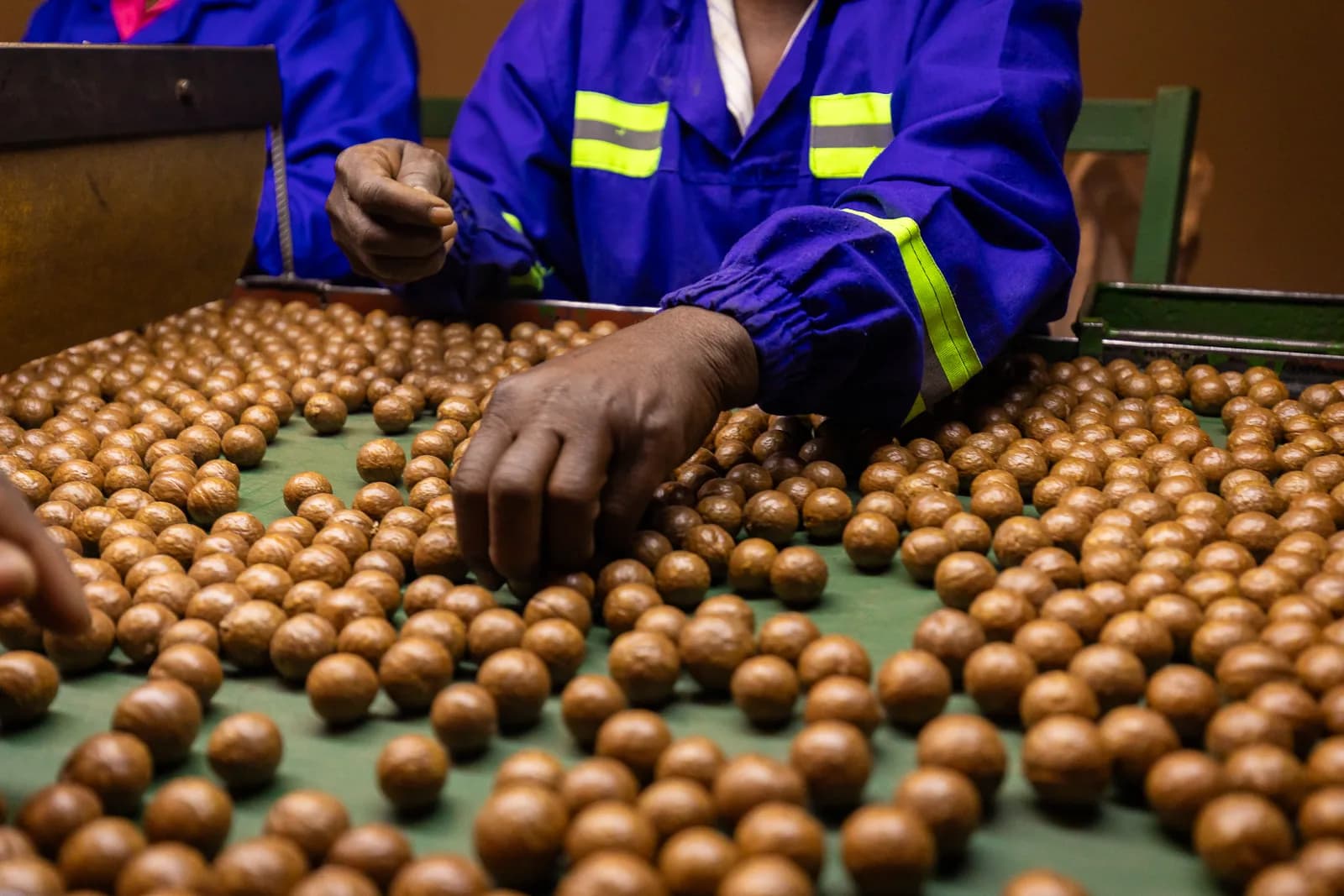
South African macadamia production has grown from just over 16,000 tonnes of nut-in-shell in 2006 to around 89,000 tonnes in 2024. Industry estimates during 2025 placed the crop at between 90,000 and 94,000 tonnes, reflecting the extraordinary expansion of an industry that remains relatively young.
The main production regions are eastern Mpumalanga, north-eastern Limpopo and coastal KwaZulu-Natal, while production has also expanded into areas such as George in the Western Cape. South Africa has an estimated 1,300 to 1,500 macadamia farmers, with the average farm covering approximately 50 hectares.
Despite this growth, the industry has also experienced considerable market volatility. Low prices between 2022 and 2024 placed growers under pressure, slowing the rate of orchard expansion. Some producers removed orchards or reduced inputs, which in turn affected yields. Even so, industry expectations remain that production could double over the next decade as existing young orchards reach maturity.
Global demand supports growth
Macadamias remain a relatively small part of the international tree-nut market, but the category is expanding as consumers increasingly seek healthy snacks, plant-based foods and premium ingredients.
Macadamias are valued for their distinctive flavour, high monounsaturated-fat content and versatility. Beyond the traditional snack market, kernels are increasingly used in confectionery, bakery products, ice cream and other manufactured foods, while macadamia oil and products made from nut shells are creating additional value streams.
South Africa remains overwhelmingly export-orientated, with around 95% of production exported. Traditionally, China has taken approximately half of the crop, followed by the United States at around 25% and Europe at about 15%, with additional exports reaching other Asian markets, the Middle East, Canada and South America.
This strong dependence on international markets also leaves growers exposed to changing prices, tariffs, currency movements and competition from expanding production elsewhere. Farmer’s Weekly reported that uncertainty around proposed US tariffs had already affected market sentiment, illustrating how quickly external developments can influence the industry.
Sustainability, resilience and innovation
Long-term sustainability will therefore depend not only on environmental performance, but also on creating a more resilient and diversified industry. Developing additional markets, increasing consumer awareness and expanding local processing and value-added products could help reduce exposure to individual markets and periods of weak prices.
At orchard level, macadamias offer opportunities for sustainable production systems. Trees can remain productive for several decades, while practices such as inter-row cover crops, composting, integrated pest management and improved water management can support soil health and biodiversity.
At the same time, continued improvements in cultivars, orchard management, processing and market development will be important for maintaining competitiveness. South African factories are already regarded as highly advanced, while further development of products such as macadamia oil, processed kernels and materials manufactured from shells could enable the industry to capture more value from the crop.
With substantial production still to come from maturing orchards, growing international demand and expanding opportunities for value-added products, macadamias are set to remain an important high-value component of South African agriculture. The challenge will be to manage rapid production growth while building markets capable of absorbing larger crops at sustainable returns for growers.