
Changing of the guard at Hortgro as Jacques du Preez takes over as CEO
A significant changing of the guard has taken place at Hortgro, with Jacques du Preez stepping into the role of chief executive officer from 1 October following the retirement of long-serving industry stalwart Anton Rabe.
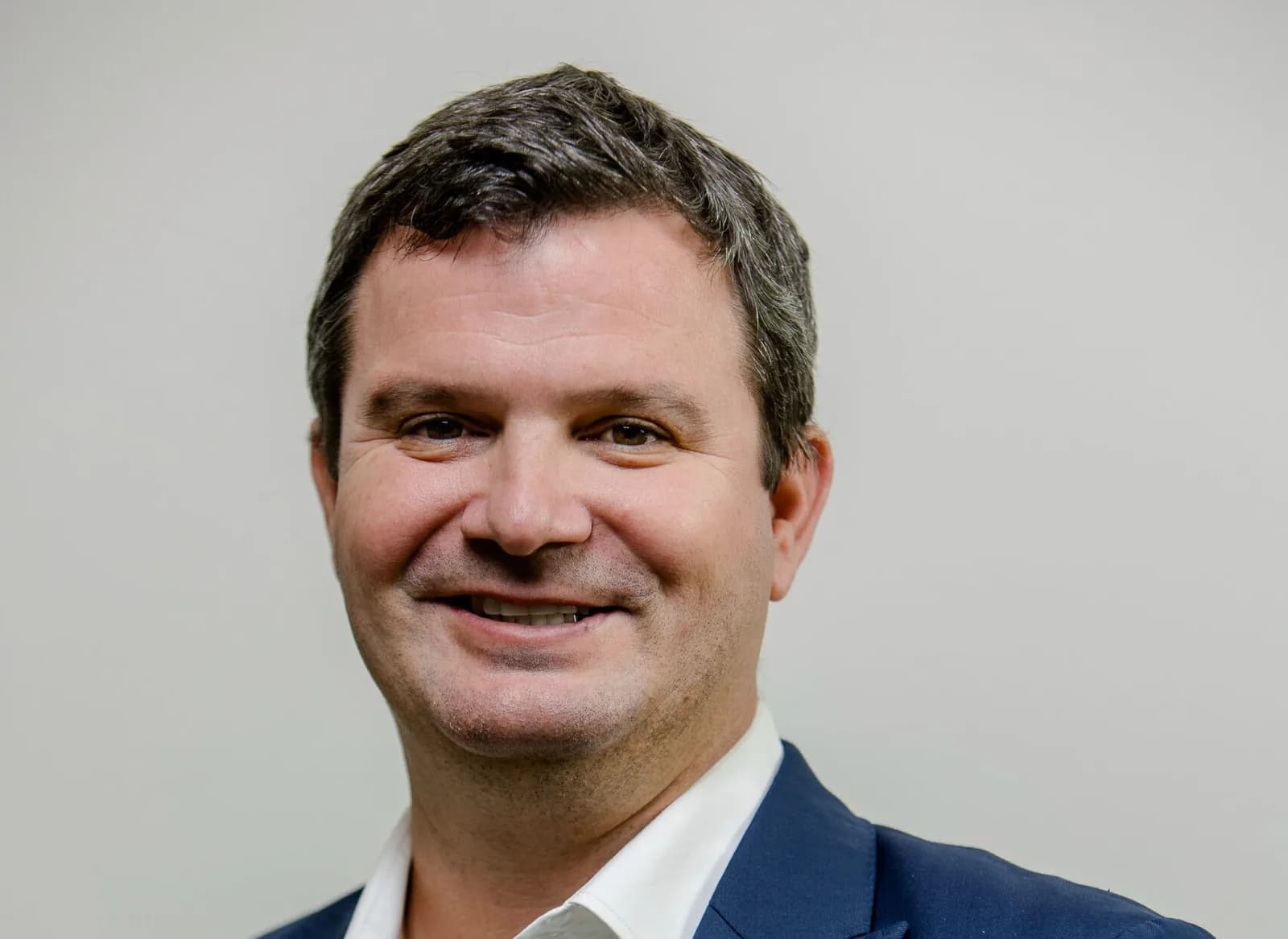
(Photo Credit: HORTGRO)
Du Preez previously served as Hortgro’s General Manager for Trade and Markets and now takes over leadership of the industry body representing South Africa’s pome and stone fruit producers. His appointment comes at a critical time for growers, with logistics, market diversification and climate resilience all placing increasing pressure on the sector.
Ports remain the industry’s biggest vulnerability
Du Preez has identified port and logistics performance as the most immediate risk facing South Africa’s deciduous fruit exporters. He described the 2025/26 stone fruit season as exceptionally difficult, with growers losing heavily due to ongoing disruption at the Port of Cape Town and its container terminal.
His concern is straightforward: South African growers can produce high-quality fruit, but if that fruit cannot reach customers on time and in the correct condition, much of that value is lost. Du Preez has described logistics as the industry’s “Achilles heel”, with delays and inefficiencies costing growers billions of rands. For producers, this makes port reform and greater supply-chain reliability one of the most important issues on Hortgro’s agenda under its new leadership.
Market diversification will stay central
Du Preez’s previous role in trade and markets gives him direct experience of one of the industry’s other major priorities: reducing dependence on a narrow group of export destinations. South African stone fruit remains heavily exposed to the UK, European Union and Middle East, while conflict in the Middle East has added further cost and uncertainty to shipping programmes.
The apple sector provides a more diversified example as Africa is now the largest market for South African apples, followed by the Far East, while India has become an increasingly important destination for both apples and pears. Du Preez has also highlighted recent progress in China, where South African stone fruit can begin shipping from the coming season and cherries have gained access. For growers, this wider market spread is becoming increasingly important as production expands and traditional destinations become more competitive.
Climate resilience and water security move higher on the agenda
Du Preez has also identified climate resilience as a long-term priority. Hortgro continues to invest a significant share of levy income in research, development and technology transfer aimed at helping growers produce more efficiently with fewer resources. This includes work on netting, water-use efficiency and precision agriculture.
Water availability is likely to become an increasingly important concern, particularly in the Western Cape, where agriculture competes with growing urban demand from Cape Town and other centres. For growers, this places greater emphasis on technologies and production systems that improve water productivity without compromising yield or fruit quality.
Why this matters for South African growers
Du Preez takes over Hortgro at a time when the sector is under pressure from forces largely outside the farm gate. Port performance, shipping disruption, market concentration, water availability and climate risk are all becoming as important to profitability as what happens in the orchard.
His background in trade and markets means these issues are likely to remain central to Hortgro’s priorities. Du Preez has indicated that he favours continuity rather than abrupt change, describing his approach as one of “evolution rather than revolution”. For growers, the key test of the new leadership will be whether Hortgro can continue expanding market access, strengthen the industry’s influence on logistics reform and support producers in adapting to tighter resource constraints.
As Anton Rabe steps away after more than three decades in the industry, Du Preez inherits a sector with strong long-term export potential, but also some of the most complex commercial and operational challenges it has faced in years.
For more information, follow the link to the recent interview with Jacques du Preez on the Lucentlands Podcast: