
South Africa's unique Fynbos Floral Kingdom: A natural treasure supports a thriving flower industry
At the southern tip of Africa lies one of the world's most extraordinary botanical treasures: the Cape Floral Kingdom, the smallest of the world's six floral kingdoms, yet one of the richest in plant diversity. Home to thousands of species found nowhere else on Earth, this remarkable natural heritage has also provided the foundation for South Africa's distinctive indigenous cut-flower industry, which supplies proteas, pincushions and other fynbos products to local and international markets.
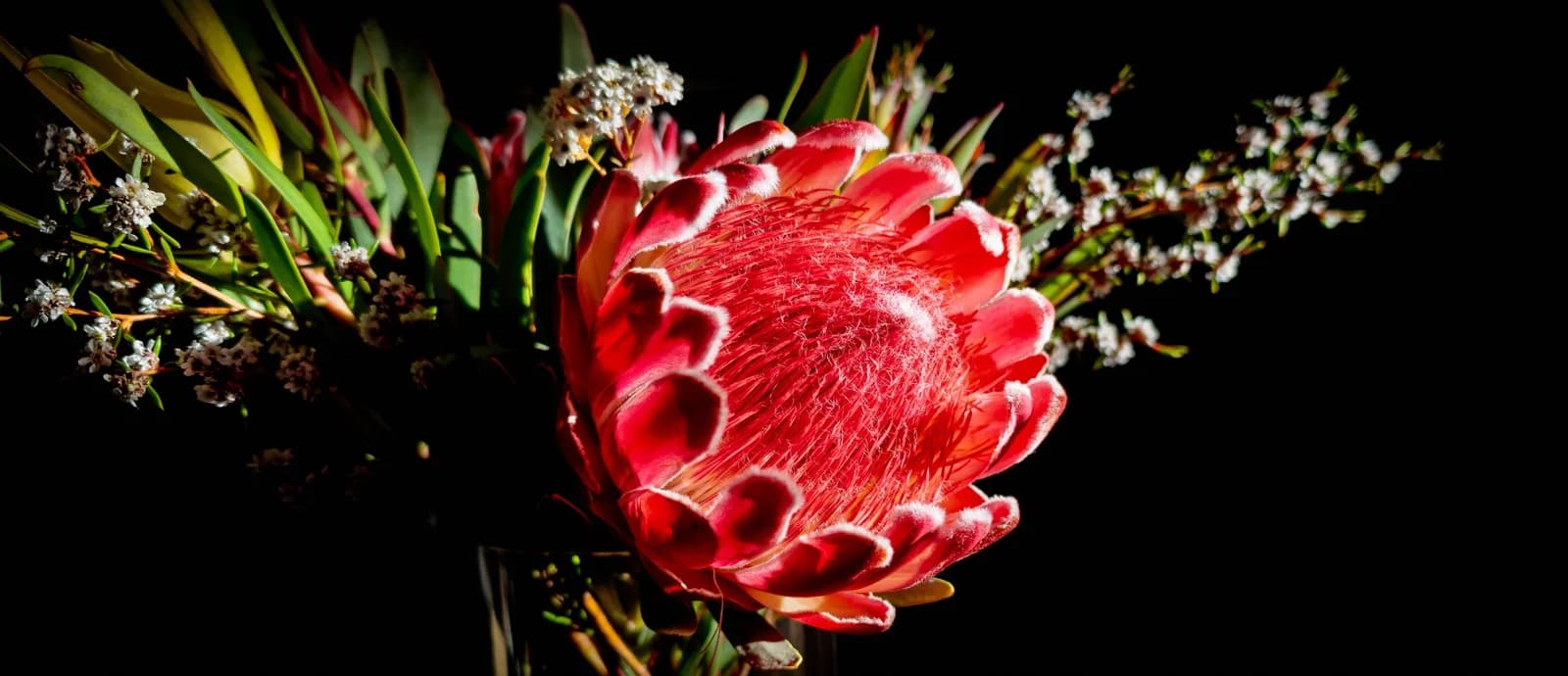
The Cape Floristic Region stretches across the Western Cape into parts of the Eastern Cape, covering less than 0.5% of the African continent while supporting almost 20% of its plant species.
According to UNESCO, the region contains approximately 9,000 plant species, of which nearly 70% are endemic, meaning they occur naturally nowhere else in the world.
Its exceptional biodiversity earned international recognition in 2004, when the Cape Floral Region Protected Areas were declared a UNESCO World Heritage Site.
A floral kingdom unlike any other
The extraordinary diversity of the Cape Floral Kingdom has developed over millions of years through adaptation to its Mediterranean climate, nutrient-poor soils, periodic fires and varied landscapes. Fynbos is the dominant vegetation type and includes several distinctive plant groups, notably proteas, ericas and restios.
Among the best-known are the spectacular king protea (Protea cynaroides), South Africa's national flower, and the colourful pincushions (Leucospermum), which have become internationally recognised symbols of Cape flora.
Other commercially important plants include Leucadendron, known for its colourful bracts and cones, as well as the delicate foliage and flowering stems used in mixed bouquets and floral arrangements.
While these plants occur naturally within the fynbos ecosystem, only a relatively small selection is suitable for commercial cut-flower production. Their unusual shapes, textures, colours and often long vase life give Cape flowers a distinctive identity in an international industry dominated by conventional cut flowers such as roses, chrysanthemums and lilies.
An important export industry with a distinctive identity
Today, South Africa's indigenous cut-flower industry is represented by Cape Flora SA, established in 2014 through the merger of the South African Protea Producers and Exporters Association and Protea Producers of South Africa.
The organisation supports the industry through research, market development, education, sustainability initiatives and the administration of industry levies.
Commercial Cape flora production is concentrated in the Western Cape, particularly in regions such as the Overberg, Boland, West Coast and Southern Cape, with additional production in the Eastern Cape and other suitable regions.
The industry consists of both cultivated cut flowers and sustainably harvested natural fynbos products.
Proteas and pincushions are grown commercially, while certain types of foliage and other fynbos products continue to be harvested from natural vegetation under regulated conditions.
South Africa's indigenous flowers are marketed domestically through florists, flower wholesalers and specialist suppliers, while international sales are particularly important to the commercial industry.
Europe and the United Kingdom have traditionally been the principal export destinations, with additional markets in North America, the Middle East and Asia.
The economic contribution is significant. According to the Department of Trade, Industry and Competition, South Africa exported more than R1.7 billion worth of cut flowers in 2021, making it Africa's third-largest cut-flower exporter at the time. Indigenous Cape flora accounted for a substantial part of this trade, although the figure includes the country's broader cut-flower sector.
In 2023, government approved protection for the name and logo of Cape Flora, recognising the importance of preserving the identity and commercial reputation of this distinctively South African product.
Balancing commercial value with conservation
The success of the fynbos flower industry depends fundamentally on protecting the natural biodiversity from which it originated.
The Cape Floristic Region is internationally recognised as a biodiversity hotspot, but large areas of its natural vegetation face pressure from agricultural expansion, invasive alien plants, urban development, inappropriate fire regimes and climate change.
Commercial harvesting must therefore be carefully managed to avoid damaging natural plant populations or compromising their ability to regenerate.
Cape Flora SA plays an important role in encouraging sustainable harvesting practices, while the increasing cultivation of commercially desirable species helps reduce pressure on wild populations.
The industry also provides important employment and income opportunities in rural communities, including harvesting, cultivation, packing, processing and export operations.
For many communities, the fynbos industry offers a commercial activity closely connected to the protection and responsible use of the region's natural resources.
A uniquely South African contribution to global floriculture
Although proteas and related flowers are now cultivated commercially in other countries, including Australia, New Zealand, Chile and parts of Europe, South Africa retains a distinctive advantage through the exceptional biodiversity and botanical heritage of the Cape Floral Kingdom.
Its natural genetic resources have provided the foundation for decades of research, plant selection and cultivar development, creating opportunities to introduce new varieties with improved appearance, flowering periods and postharvest performance.
This unique combination of natural biodiversity, commercial cultivation and specialist knowledge has helped establish Cape flora as an internationally recognised category within the global flower trade.
South Africa's fynbos flower industry represents far more than the commercial production of beautiful blooms. It is an example of how an extraordinary natural heritage can support agricultural innovation, rural livelihoods and international trade. Its continued success will depend on maintaining the delicate balance between commercial development and conservation, ensuring that one of the world's most remarkable floral kingdoms remains both a source of economic opportunity and a treasured natural inheritance for future generations.
Sources:
UNESCO
https://whc.unesco.org/en/list/1007
SANBI
https://pza.sanbi.org/vegetation/fynbos-biome
Cape Flora SA
https://www.capeflorasa.co.za/about-us
Post Harvest Innovation Programme
https://postharvestinnovation.org.za/commodities/exotic-cape-flora
Department of Trade, Industry and competition
https://www.thedtic.gov.za/announcement-of-protection-for-r17-billion-cut-flower-export-industry
South African Historical Journal
https://www.scielo.org.za/scielo.php?pid=S0259-01902002000100005&script=sci_arttext